

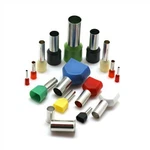
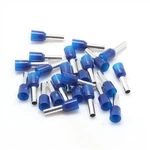
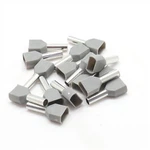
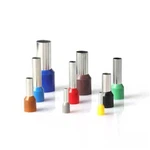
Insulated Cord End Terminals
What is Insulated Cord End Terminals
The Insulated cord end terminals is designed to protect the exposed wire from the screw, terminates the end of a cable to terminal blocks or connectors, and enables a stronger connection. It is made up of 99.95% of original pure copper (Cu), electroplated with tin (Sn) for strong corrosion-resistant exterior.
Benefits of Insulated Cord End Terminals
Enhanced Safety with Insulation The most apparent advantage of Insulated cord end terminals is their insulation. These terminals come equipped with a protective sleeve made of high-quality, durable materials such as polyvinyl chloride (PVC) or nylon. This insulation serves a dual purpose: it provides electrical protection by preventing accidental contact with live wires and also acts as an insulator against environmental factors like moisture and chemicals. As a result, the risk of electrical shock, short circuits, and damage to the terminal is significantly reduced.
Efficient and Secure Connections Insulated cord end terminals are designed to facilitate quick and secure connections. Their fork-like shape is engineered for easy installation and removal, making them suitable for a wide range of applications. These terminals can be easily crimped onto wires or studs, ensuring a tight and stable connection that minimizes the risk of accidental disconnection, which can lead to disruptions, equipment damage, or even safety hazards.
Versatility for Multiple Applications These terminals are highly versatile and can be used in various industries and settings. Whether in automotive, industrial machinery, aerospace, or residential electrical systems, Insulated cord end terminals find applications wherever electrical connections are essential. They are available in a variety of sizes, allowing for compatibility with wires and studs of different dimensions.
Corrosion Resistance The materials used in Insulated cord end terminals are chosen for their corrosion-resistant properties. This is particularly important in environments where exposure to moisture, chemicals, or extreme temperatures is a concern. The protective insulation, coupled with the corrosion resistance, ensures that the terminals maintain their integrity and functionality over extended periods.
Compliance with Standards Electrical safety standards and regulations are stringent, and compliance is non-negotiable. Insulated cord end terminals are often designed and manufactured to meet these standards, ensuring that they adhere to specific performance and safety criteria. This compliance provides peace of mind to engineers, electricians, and users, knowing that the terminals they are working with meet industry standards.
Visual Identification The insulation sleeves of these terminals often come in various colors, allowing for easy visual identification. This color-coding simplifies the installation process and helps prevent errors in connecting wires to the wrong terminals. It's a small yet significant feature that contributes to the overall efficiency and safety of electrical work.
Cost-Effective Solution Considering the protection, versatility, and safety benefits they offer, Insulated cord end terminals are a cost-effective solution for electrical connections. Their durability and long lifespan contribute to reduced maintenance and replacement costs, making them an excellent investment for various industries.


Why Choose us
Quality Assurance
Wenzhou baoteng always provide quality assurance to customers with strict standards and through multi-party quality system certification, such as ce, rohs, iso 9000.
Customer service
The company offers excellent customer service and support, making it easy for customers to resolve any issues they may have with the product.
Reputation
A company with a positive reputation is more likely to attract customers. Reputation is built through consistent quality service or products, good customer relations, and reliability.
Available Insulated Cord End Terminals types and materials include
Non-Insulated Terminals
The most economical terminal – used where special performance or installation characteristics are not needed. Beveled mouth facilitates wire insertion. Maximum temperature for bare terminals: 175°C/347°F.
Vinyl Insulated Terminals
Used where insulated barrel is necessary and desirable. Features an insulation sleeve of color-coded polyvinyl chloride (PVC) permanently tapered to the barrel. It is molded as a funnel entry sleeve to eliminate wire strand hang-up, which in turn, increases crimping rates. The PVC insulated terminal offers excellent insulating qualities as well as protection against vibration damage.
Wire insulation positions itself against funnel portion of vinyl sleeve thus eliminating strand hang-up. Crimping barrel and flared portion of sleeve provide excellent electrical contact plus mechanical stress relief at junction of insulation and barrel. Insulation has a non-slip ridge for ease of positioning crimping tool. Industry standard color-coding indicates wire range. Insulators are rated at a continuous operating temperature range from -40°C to 105°C/-40°F to 220°F.
Nylon Insulated Terminals
Features a tin-plated brass-gripping sleeve which strengthens the barrel and secures the wire. This barrel is fitted with a funnel entry, color-coded sleeve to offer excellent insulating qualities. The ultimate in rugged construction and high performance quality, nylon insulated terminals protect against stress and high vibration.
Nylon Insulated Butted Seam With Insulation Grip
Used where insulated barrel and positive insulation grip are necessary and desirable. Terminal consists of butted seam part with flared, seamless brass sleeve securely attached and covered with flared, molded nylon sleeve. Wire insulation positions itself against funnel portion of brass sleeve. Crimping barrel and flared portion of sleeve provide excellent electrical contact plus mechanical stress relief at junction of insulation and barrel. Positioning crimp tool is nearly mistake-proof due to a “step” in nylon insulation. Industry standard color-coding indicates wire range. Insulators are rated at a continuous operating temperature range from -40°C to 105°C/-40°F to 220°F.
Heat Shrink Insulated
Heat Shrink Insulated Terminals protect against the most challenging of environments making the best moisture protection available. Read below for more information on the several advantages Heat Shrink Terminals offer over conventional unsealed products.
Heat Shrink Terminal Characteristics
Corrosion Resistance – The adhesive-lined heat shrink material, when properly crimped and shrunk, provides a seal resistant to water, salt, steam and other contaminants.
Improved Mechanical Performance – The adhesive-lined heat shrink tubing adheres, when shrunk, to both the connector and the wire insulation providing improved pullout strength and strain relief.
Durable – Tough heat shrink tubing effectively resists abrasion, scoring, cut-through, and the effects of long term aging.
Versatile and Easy to Use – Heat Shrink Terminals are available in wire sizes 22-10 AWG and can be installed easily with a recommended tool and heat source.
High Temperature Terminals
High Temperature Terminals are often used in ovens, motors, light fixtures and other applications where other terminals would corrode or melt. High Temperature Terminals are constructed of steel with a nickel plating. They have a temperature rating for continuous use at 482°C/900°F and intermittent use at 667°C/1200°F.
Best Practices for Using Insulated Cord End Terminals
Proper Wire Preparation
Before crimping or connecting wires to terminals, it's essential to properly prepare the wire ends. This includes stripping the insulation to expose the conductor and ensuring the wire is clean and free of any debris or corrosion. Properly prepared wires result in stronger and more reliable connections.
Selecting the Right Terminal Type
Choosing the appropriate Insulated cord end terminals for your application is crucial. Consider factors such as wire size, insulation type, and environmental conditions when selecting terminals. Using the wrong type of terminal can lead to poor connections, increased resistance, and potential safety hazards.
Crimping Techniques
When crimping terminals onto wires, it's essential to use the correct crimping tool and technique. Ensure the terminal is properly positioned on the wire, and use the appropriate amount of crimping force to create a secure connection. Over-crimping or under-crimping can weaken the connection and compromise performance.
Insulation and Protection
For applications in harsh environments or where exposure to moisture or chemicals is a concern, consider using insulated Insulated cord end terminals. Insulation helps prevent corrosion, electrical shorts, and other issues that can arise from exposure to external elements. Additionally, using protective covers or heat-shrink tubing can further enhance the durability and reliability of wire connections.
Proper Installation and Mounting
Proper installation of Insulated cord end terminals involves securely fastening them to the desired surface or mounting point. Ensure terminals are properly aligned and tightened to prevent loosening or movement over time. Additionally, provide adequate strain relief to prevent excessive stress on the wire connections, which can lead to failure or damage.
Regular Inspection and Maintenance
To ensure continued performance and safety, it's essential to regularly inspect Insulated cord end terminals for signs of wear, damage, or corrosion. Replace any damaged or deteriorated terminals promptly to prevent potential issues. Additionally, consider implementing a routine maintenance schedule to keep your electrical or electronic systems in optimal condition.
Key Insulated Cord End Terminals Electrical Considerations


Current Rating
The current rating is often the most important parameter to consider in Insulated cord end terminals designs. The current rating is based on the conductivity of the terminals, cross-sectional area, and the corresponding heat rise. Operating at too high of a current can cause overheating and damage of the Insulated cord end terminals, leading to major safety concerns. It is best practice to use a Insulated cord end terminals that is rated for at least 150% of the max current that is expected in the system.
Voltage Rating
The voltage rating is in part determined by the dielectric strength and pitch of the Insulated cord end terminals housing. The maximum system voltage of the application must be less than the voltage rating. Any voltage surges in the system should also be evaluated when selecting the Insulated cord end terminals.
Pole Count
The number of individual circuits within the Insulated cord end terminals is also known as the pole count. This can be as few as a single pole, and as high as 24 poles and beyond, based on how many individual circuits are needed in the specific application.
Pitch
A Insulated cord end terminals pitch is defined as the center distance from one pole to the next. The pitch of the connector is often determined by the overall rating of the Insulated cord end terminals where factors like voltage/current, creepage, and clearance are considered. Common industry pitches would be, but are not limited to, 2.54 mm, 3.81 mm, 5.0 mm, and 7.62 mm.
Wire Size/Type
The minimum and maximum wire size that the Insulated cord end terminals can accept would be a function of the voltage/current rating. In addition to making sure the wires used will physically fit into the Insulated cord end terminals, the type of wire should also be considered. Stranded or multi-core wire is typically used for screw terminals, and single-core is typically used for push-in style Insulated cord end terminals. In North America wire size is specified in units of American wire gauge (AWG). Wire size can also be specified as mm2.
Our Factory
WENZHOU BAOTENG was established in 2013. After more than 10 years of development, it has become a comprehensive integration of industry and trade company, which engaged in design, development and production of various terminals and connectors professionally.
We have a complete research and development team, constantly developing more and more designs every year.
Quality is our culture, service is our standard, we have been holding this philosophy to provide customers with quality products. WENZHOU BAOTENG always provide quality assurance to customers with strict standards and through multi-party quality system certification, such as CE, ROHS, ISO 9000.
WENZHOU BAOTENG is engaged in the supply of electrical products with the quality of "Safe, Reliable, Suitable and Steady", observes the commitment of "Leader in science and technology, Honest operation, Quality and Customer first", provides highest quality and the most sincere services for the new and old, domestic and foreign customers.
